25 years of doing this kind of work, for real money.
I’m Delmar Barber. I’ve earned blue-collar money both ways — on union jobs and in my own business. Blue Collar Funded is the system I run my own life and work on, taught in the order I wish somebody had taught me.
Real photos: the work and the money it made.
My story
I started with a borrowed hammer.
First
Four years in the Marine Corps
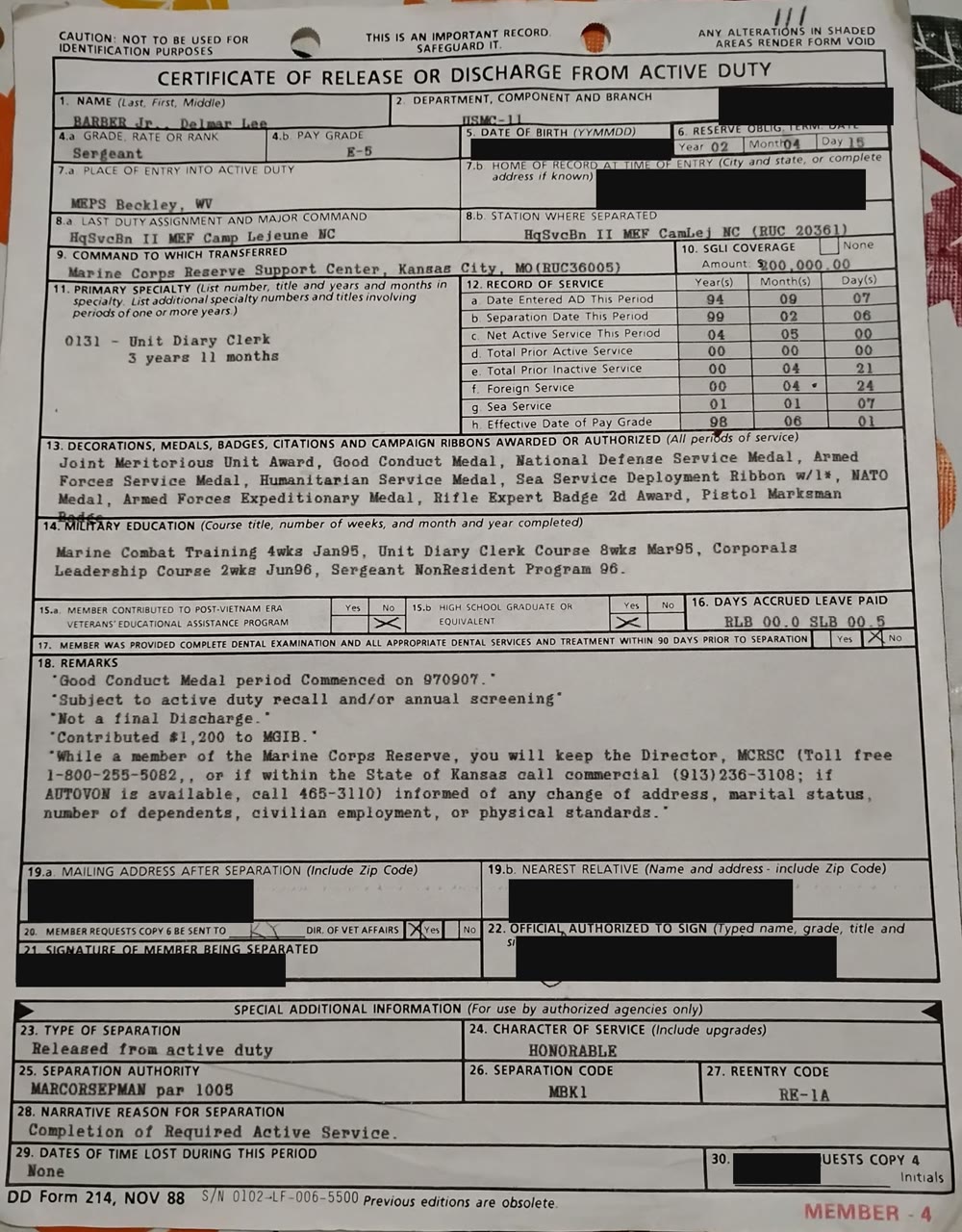
I went through Parris Island and did four years in the Corps, with deployments on the USS Guam. The Marine Corps put this natural born killer in an office. I was cycled through 2nd Battalion, 2nd Marines as an 0131, and eventually transferred to the 24th MEU Command Element, where I was given a Top Secret clearance. This is where things began to change for me, though I wouldn’t realize it until many years later.
When I was with 2/2, the grunt unit, there was a guy named Lance Corporal Moore. Moore was a wannabe hacker, and he’d bought a book about hacking. Computers were still fairly new in the ’90s, so we didn’t understand a lot. Moore piqued my interest with some small programs he was building and saving on 1.44 MB floppies. It was neat, and Moore is the one who led me into HTML.
Moore would eventually write some code while practicing his craft, accidentally release it on 2/2’s system, and crash the whole system with his virus. If you knew Moore, you’d understand, and it’s the exact reason he got off as easy as he did. He was a good guy. He was just an idiot.
After I left 2/2 for the 24th MEU, the man I worked for was Captain J. W. Bicknell, and he taught me command-line and database programming. All of this matters, because it’s the foundation of what Blue Collar Funded and Command Center are.
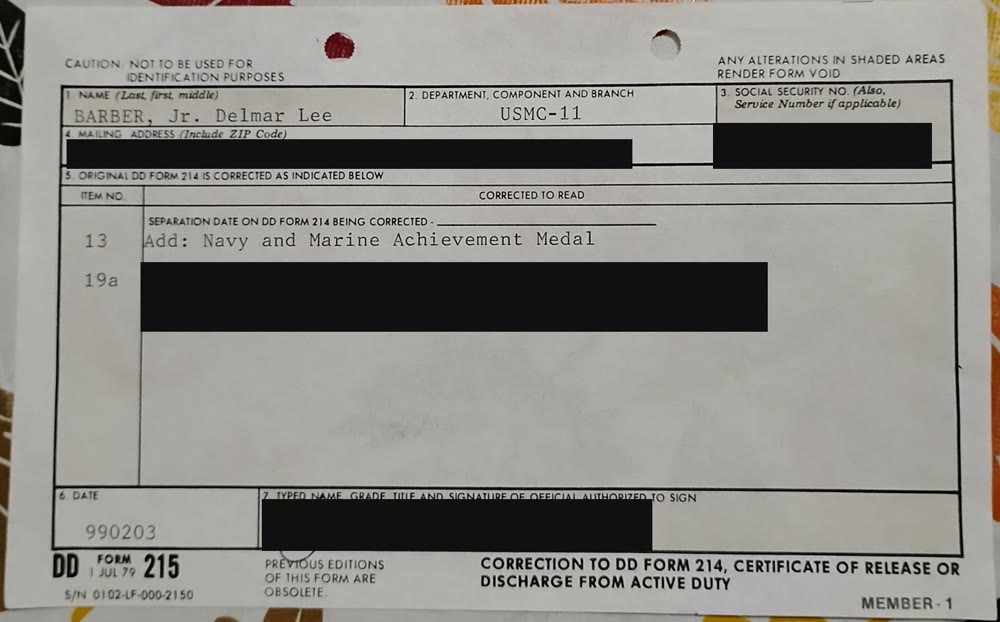
My drill instructor, Sgt. Dankavich, shaking my hand at graduation. I’m on the right.My DD-214. Sergeant, 0131 Unit Diary Clerk, Honorable.The DD-215 that added my Navy and Marine Corps Achievement Medal.
After the Corps
Human Resources
After the Corps I took a desk job as a compensation analyst in Human Resources. A salary, benefits, a path. My wife and I had just had our second child.
In HR I used what I’d learned in the Marine Corps — HTML from Moore and database programming from Captain Bicknell — and automated a large portion of my job, particularly the pay raises and the annual review process. It was here that I began to learn JavaScript and PHP. CSS was just beginning to be a thing, and HTML was still using tables for layout.
In the IT department there was a man named Nick Cloyse, who taught me a significant amount about Excel. That’s what enabled me to build the spreadsheet I ran my business with, the spreadsheet that would become the foundation of Command Center.
All of the pieces of Blue Collar Funded and Command Center were coming together in the background of my life, and I didn’t know it.
The only thing missing was learning construction and running my own company, but as fate would have it, that’s what came next.
Then
A borrowed hammer and a five-dollar tape
I would end up leaving my job as a compensation analyst to work construction for a friend of mine for $11.50 an hour. Yes, HR was that bad of an experience, that it was worth throwing away a potential career for next to nothing on the hour.
And with a borrowed hammer, my brother’s tool bag and speed square, and a five-dollar tape from Lowe’s, I went to work. I worked with Steve for close to four months before he laid me off, right before Thanksgiving. It for sure wasn’t enough to learn what I needed to.
That winter I pulled vines out of trees in the woods and sold them as porch decorations. That winter is what got us through.
Two inches of hundreds, from one of my first big-money jobs.
Going solo
I learned the business the hard way
In January I ran an ad in the newspaper, with about four months of construction behind me. I was on my own.
On my first siding job, I had to pull out the directions and read them before I started. It was the same with my first roofing job. I flipped the pack over, read the instructions, and off I went on sheer bravado and the confidence of a man who did not know what he did not know. Not only did I not know the business of construction, I didn’t even know the essentials of construction. But I knew how to read, even if it had to be written in crayon.
I underpriced everything, out of goodwill and out of not knowing any better. Cold, heat, rain, snow, injuries, sickness — I went anyway. Every morning I reminded myself I wasn’t doing it for me. I was doing it for three people: my wife and my two kids.
“More than once learning this craft I lost.”
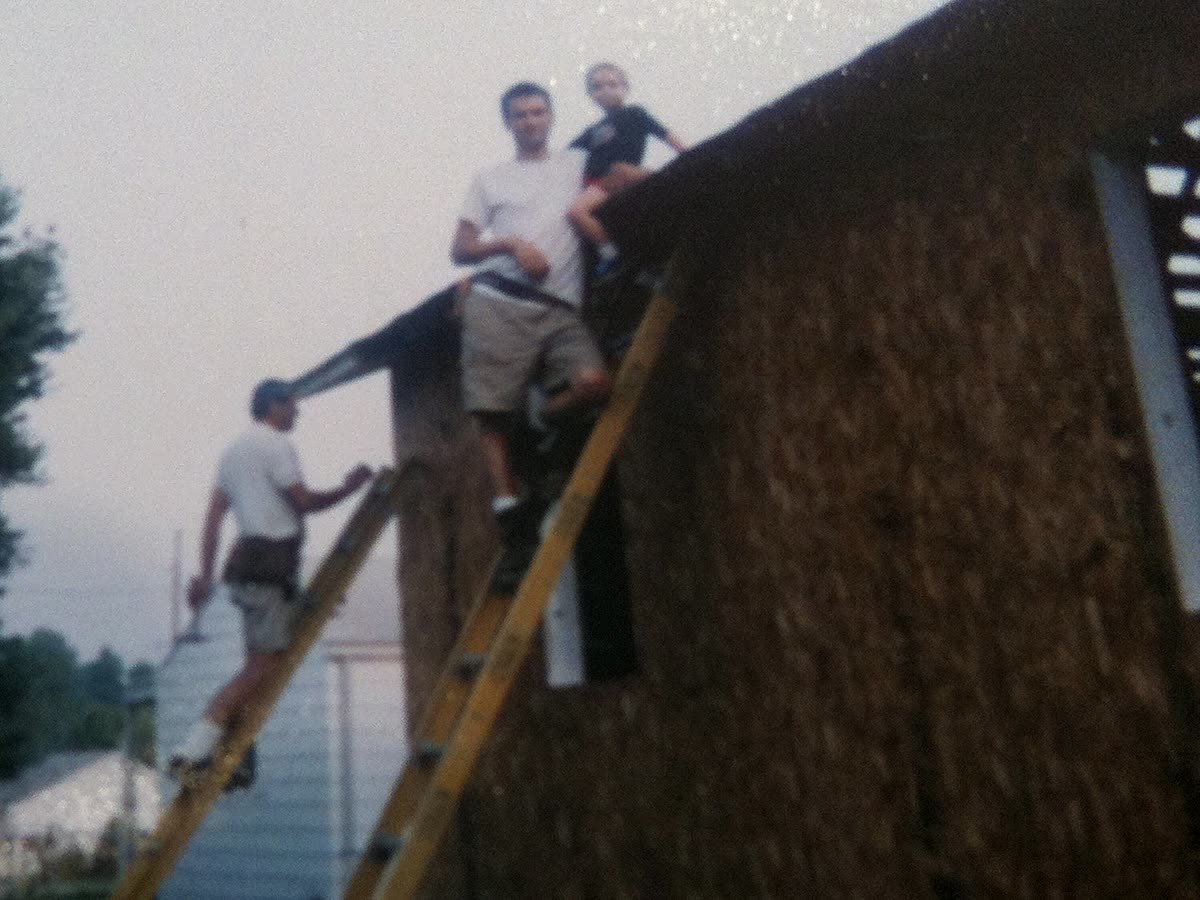
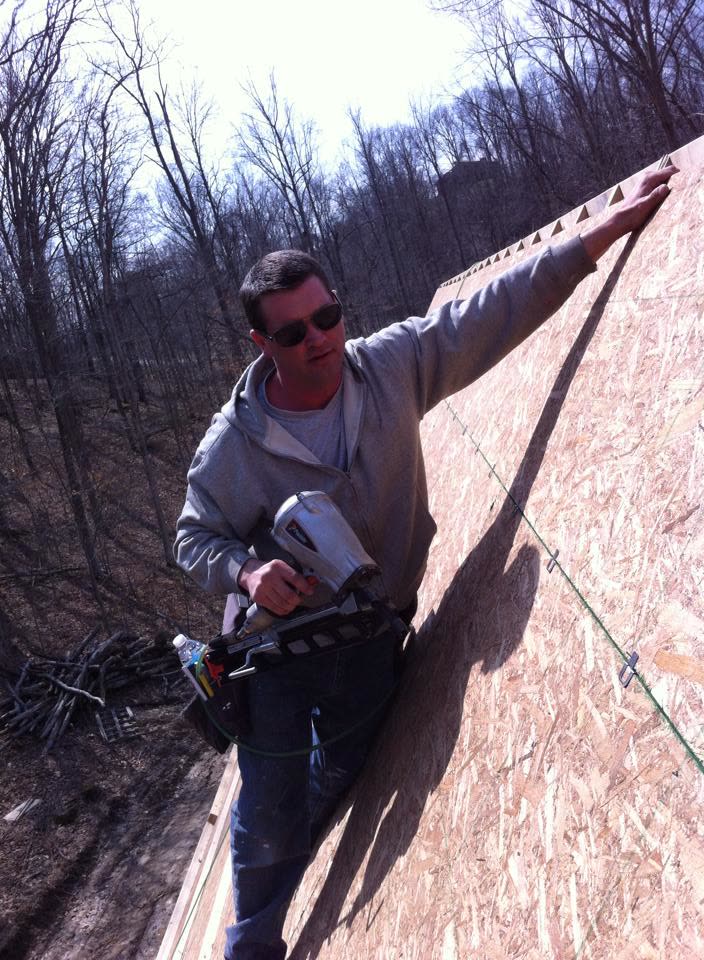
My dad and me on the ladders, building my house. That’s my son up on the roof with me.Framing a 14/12 roof, walking a 2×4 toe board.Hanging on to the cross after weatherproofing it in aluminum.A 5,200 sq ft house I framed and shingled.
Figuring it out
The estimating spreadsheet
What Nick taught me about Excel paid off. I built a spreadsheet that started as purely estimating, and I loved that spreadsheet. You could take off an entire house in a matter of minutes, just by entering the lineal feet of the interior and exterior walls for each floor. Enter the ceiling height and the roof pitch, and you were done. It calculated everything and produced a material list.
I used a Word template that would put the scope of work into a proposal I wrote. That was the beginning.
2010
It was working
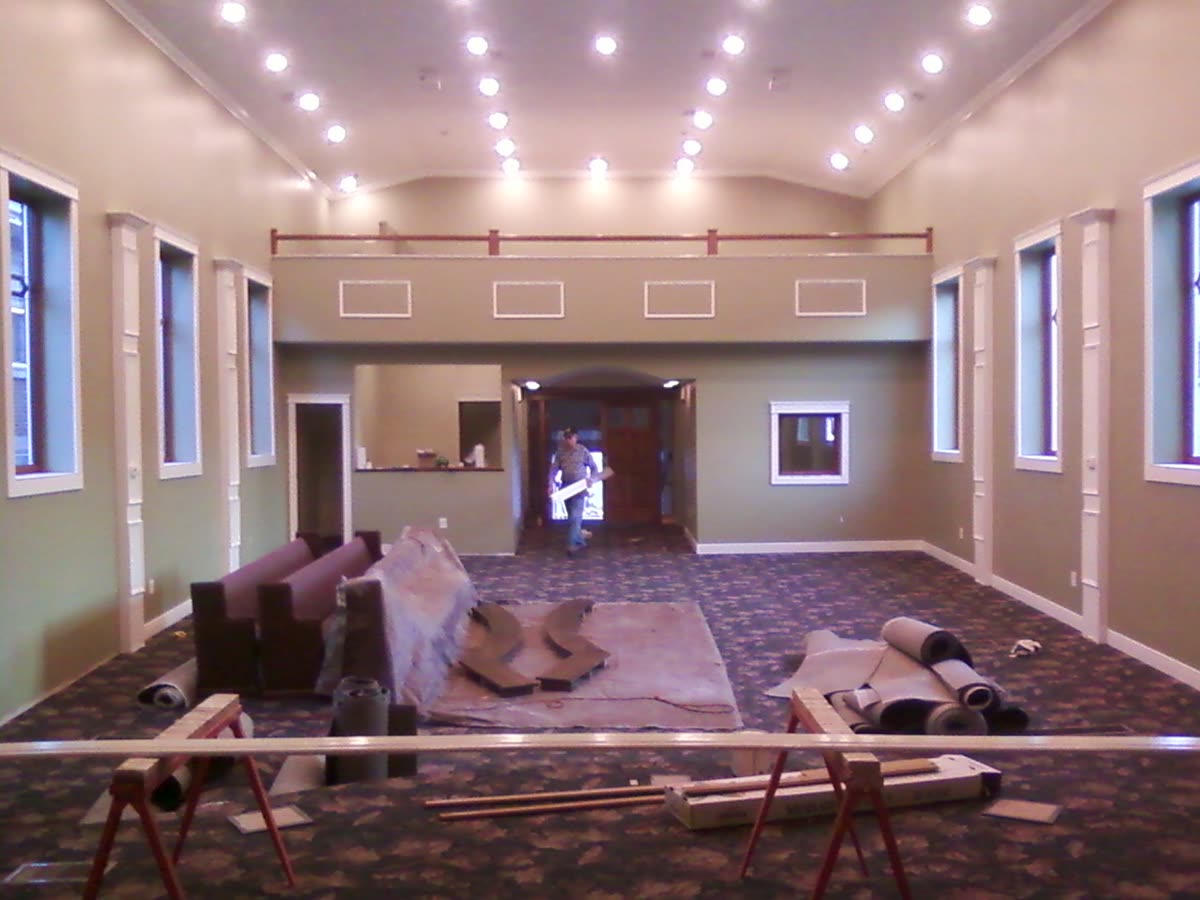
The pieces came together. By 2010 I was running multiple crews in my own company, and I landed some very large projects. One was a 10,000 sq ft church remodel.
The crews were mostly managing themselves. I ran the logistics side of the business while they produced, and for the first time I had “free time.” After the material runs and site visits, I could go home. My wife kept asking me why I was home so much, lol. I was home because it was working. To some degree, anyway.
I hadn’t come up with BASE at this point, and the true cost of running employees was eating up my very small margin. But it was working, and my income was increasing. It was too late for my family, but that’s a different story, and one of the reasons that would drive me to figure this out.
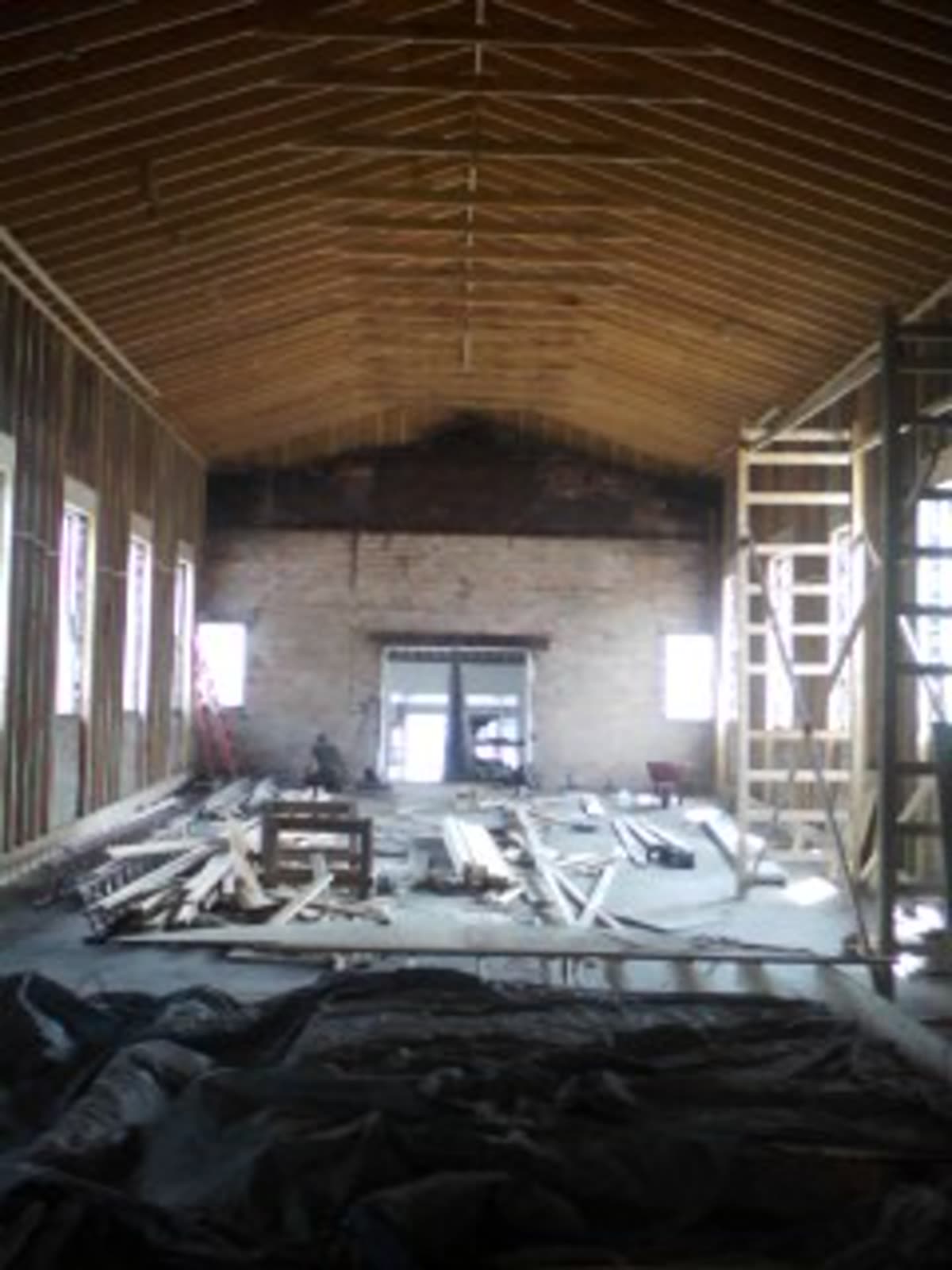
The 10,000 sq ft church remodel, opened up and reframed.Drywall going up around the stone arch.Finished: lights, trim and carpet, pews going back in.
Then it fell apart
A divorce, a broken leg, a lost year
Then came a major life-changing event: my divorce. I shut everything down and went back to working solo. I just didn’t have it in me to care about the business anymore.
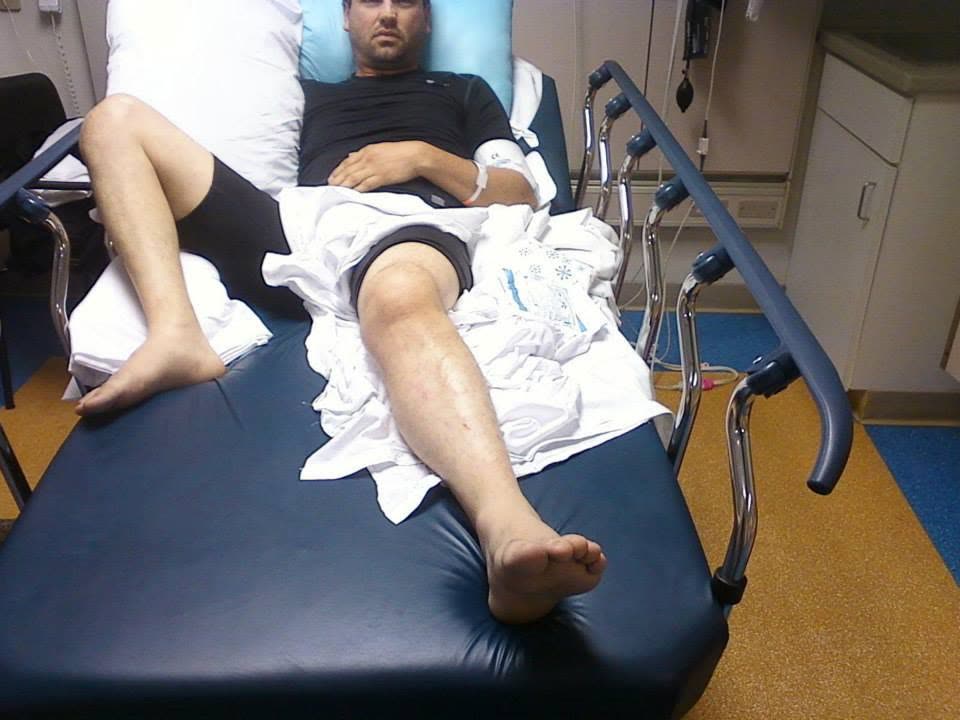
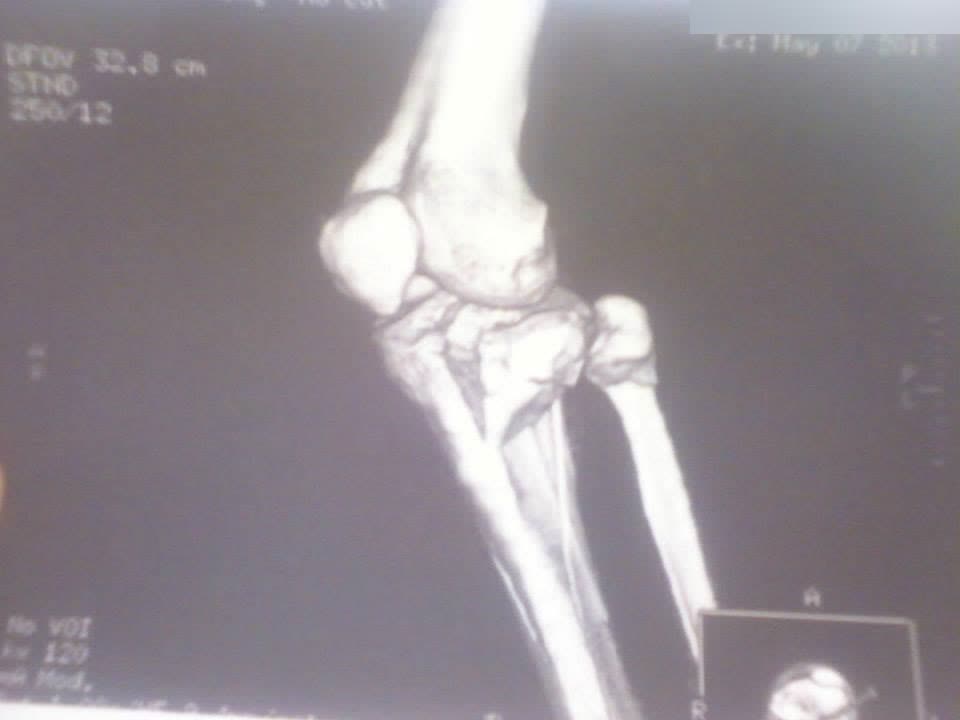
Then I broke my leg in a jiu-jitsu training accident, and I lost close to a year’s work.
The ER. That leg isn’t supposed to bend there.Tibial plateau and spiral fracture.
The last eight years
I ended up loving the union
When I could work again, I tried to start back up, but I was so far in debt that it wasn’t working. The money in the Carpenters union was too good to pass up, so I joined Local 472. The plan was to money up and start over. I had BASE in its most basic form by then, but I needed the money the union provided, so the system stalled where it was.
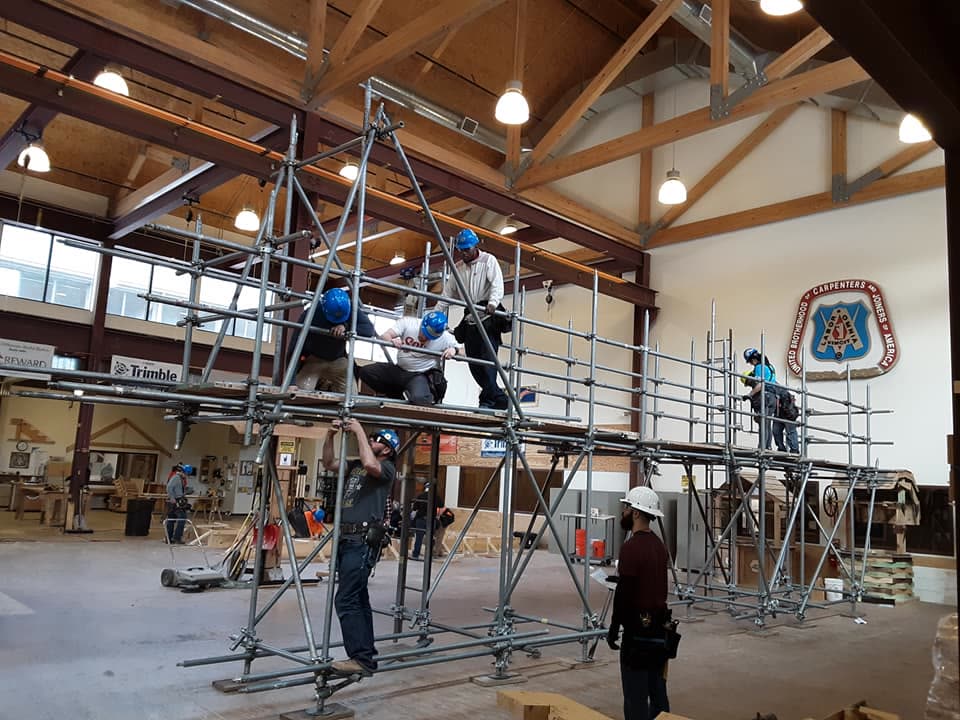
Scaffold building was everything I love: hard work and danger. Clock in, clock out, get paid good, with a benefits package and insurance. What more is there to ask for? Along the way I went from scaffold builder to carpenter to foreman, running more than twenty men.
Travel money looks big on the paycheck, and I soon found myself in golden handcuffs. But travel is a sacrifice. I have a family, and they’re hard to see when the shift is 13 and 1, at 7/12s or 5 tens and an 8. So home I’d come. I was tired of being gone, and people kept reaching out to me for work I wasn’t there to do. So I’d start back up.
For eight years I worked a mix of my own business and the union.
The 40-hour scaffold class for union work.
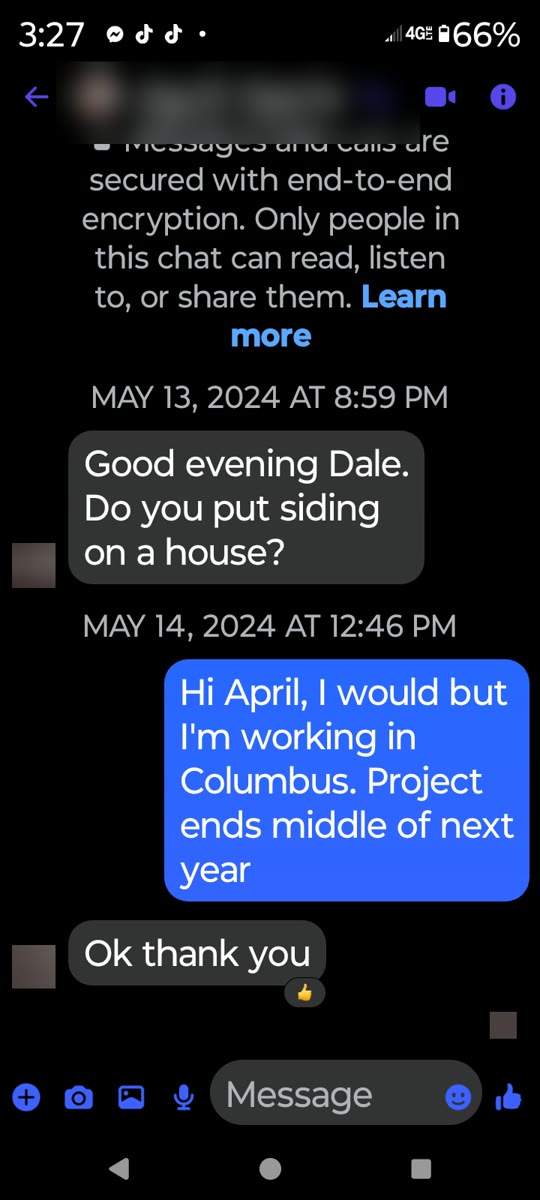
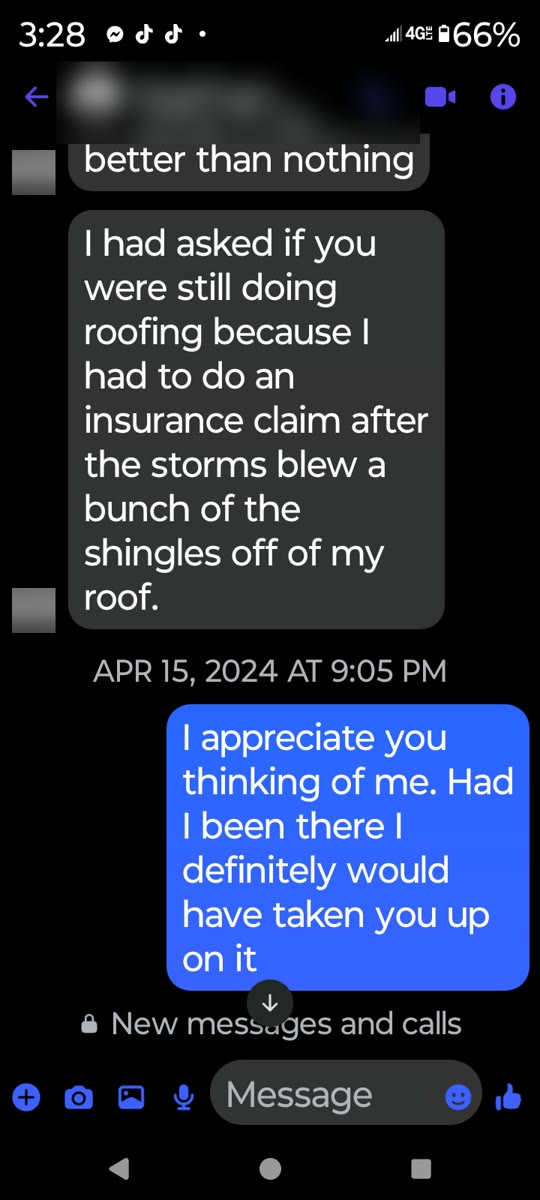
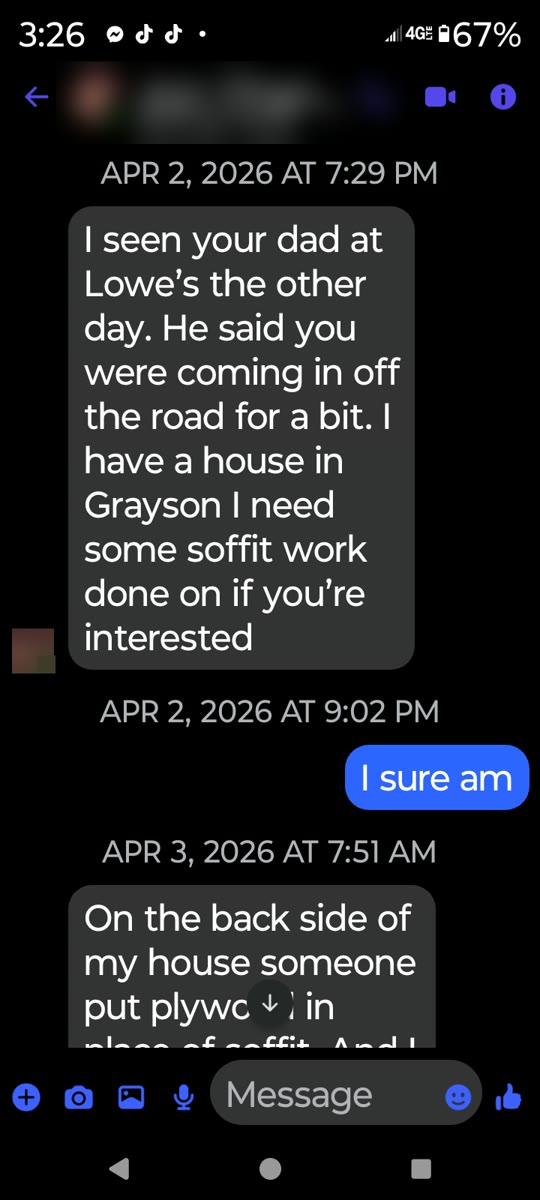
“I’m working in Columbus. Project ends middle of next year.”“Had I been there I would definitely have taken you up on it.”“I seen your dad at Lowe’s. He said you were coming in off the road.”
Coming home
BASE came together
When being gone so much was no longer an option and my project in Pennsylvania ended, I came home. I was looking for another travel job, because I was wearing a pair of golden handcuffs. Then a friend of mine wanted me to find work. He had worked for me before, and he and I had split a few jobs. He needed work, and he knew I had a customer base, because while I traveled I would send him some of the jobs people were asking me to do.
As much as I loved the union, the thought of being home was enough to convince me to get some local work and go for it again. So once again, with nothing more than the tools I had, I started again.
This is where I began to experience the mental shift I needed so long ago: from thinking like an employee to thinking like a business owner.
“I just wanted enough, you know what I mean. Just enough to get by and give my wife and kids a little extra.”
I had always been good at the work. I could estimate every job down to the penny, in a fraction of the time it used to take. But I wasn’t fully funding my life. It was bare minimum survival. This is where BASE truly came together: the number for what my whole life actually costs, so I could price my work to fund it. Not what the job costs. What my life costs, separate from my work.
These last eight years of off-and-on union and self-employment are what put all the pieces together.
On the road or at home, the calls never stopped. Customers sent me their neighbors. Realtors sent me their clients. People I hadn’t worked for in years tracked me down.
That’s what I mean when I say your character is your brand in the community. You do the work right, and the community does your advertising for you.
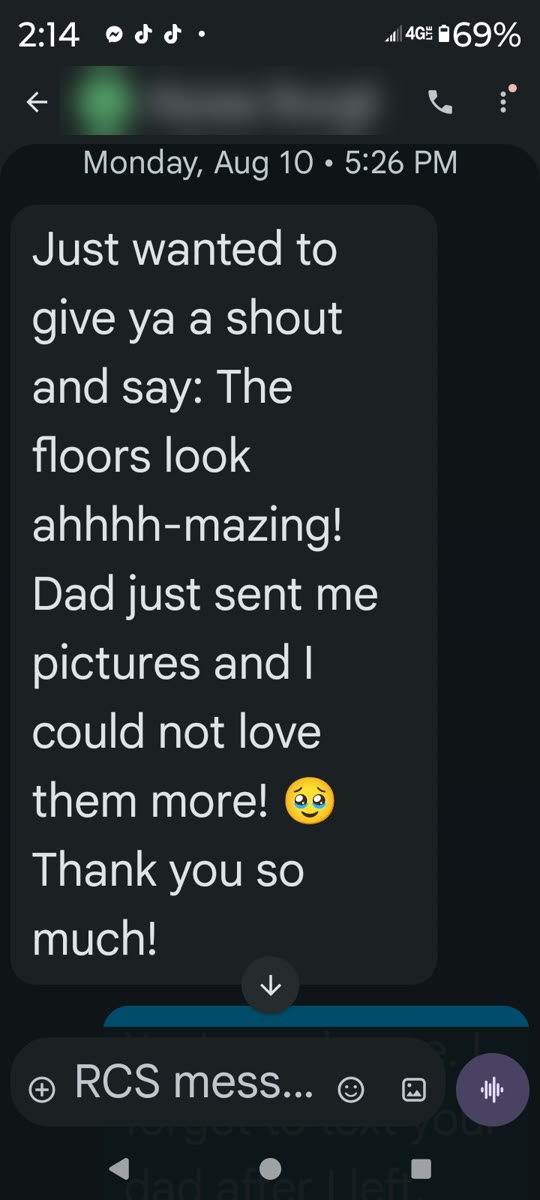
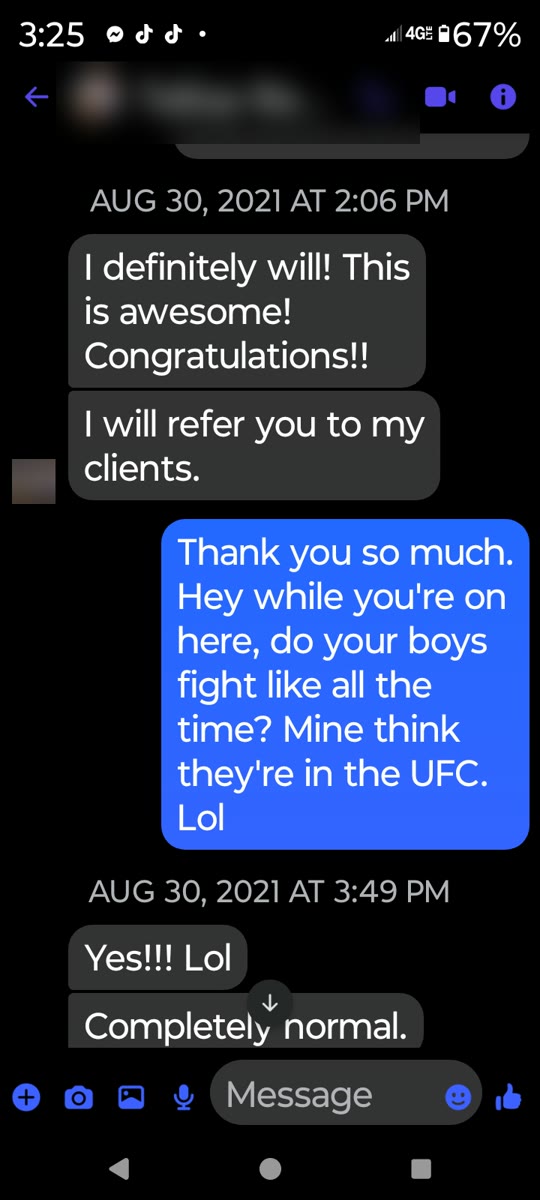
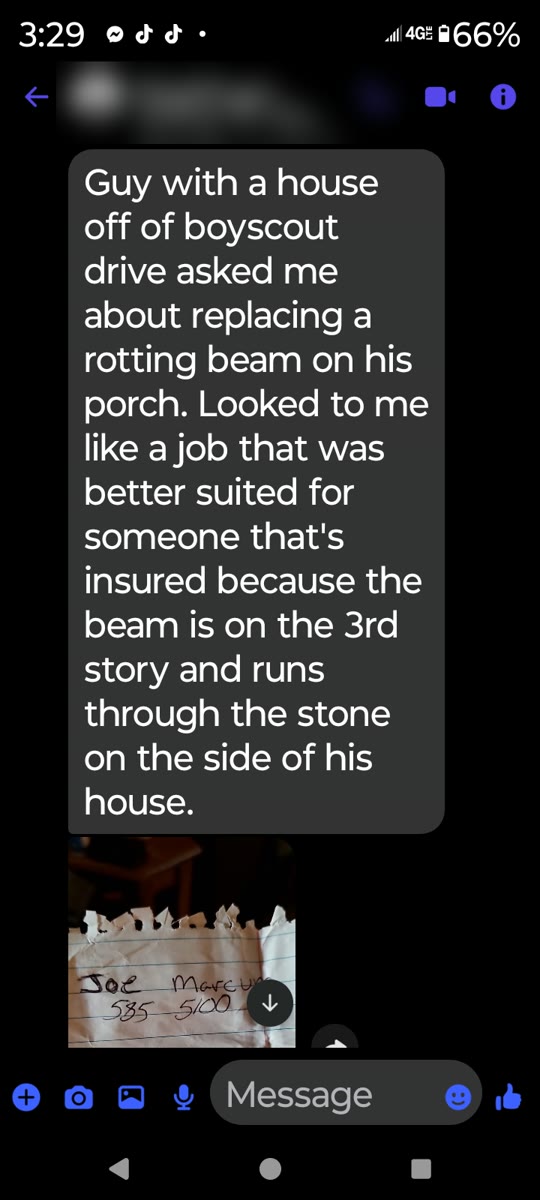
“The floors look ahhhh-mazing!”“I will refer you to my clients.”A customer finding me my next job.
March 2026
Why I built this
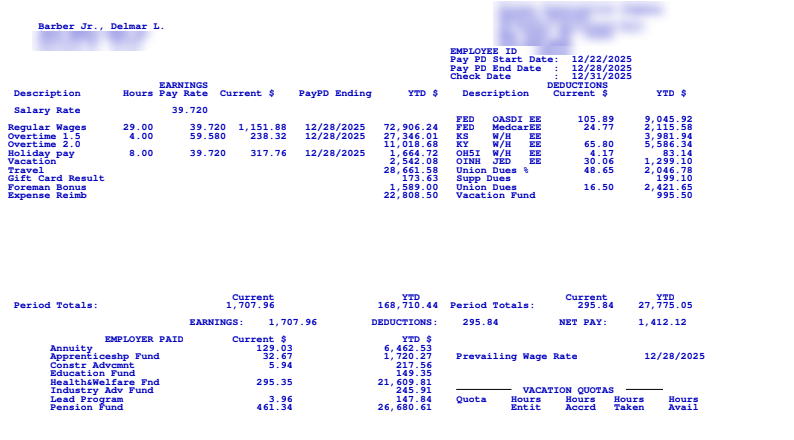
In March 2026, my last union project ended. My last year in the union, I made $168,710.
My year-end stub, December 2025. $168,710.44 year to date.
But that number came with a pair of golden handcuffs I built for myself. Look at the stub: I worked close to 600 hours of overtime to hit the income my family had grown accustomed to. That’s a little over a quarter of a year — an extra three months of full-time work. On top of that, six months of that year I was several states away from my family. As much as I loved my job and the company I was working for, that’s a lot to ask of your family, especially with young kids.
You can never reclaim days past. Once they’re gone, they’re gone for good. There’s no such thing as making up for lost time. You can only make the most of what you have left.
So I walked away to build this. And I have built a lot. If I’m being honest, I built it all for myself. This is the full system in effect: the jobs I did brought in $54,750 in 90 days, putting roughly $2,200 a week in my pocket, before taxes.
Real checks and cash from those 90 days. Customer names and account details are blacked out. Not all payments are shown.
These are my numbers, from my own work. They’re not a promise of what you’ll make. What you earn depends on your trade, your market, your prices and how much you work. I teach the math. I can’t guarantee the income.
You don’t need a 7-figure business to earn a 6-figure income. What you need is the basics of business and personal finance. That’s what I teach.
I built Blue Collar Funded for people like me, who do the kind of work I do. The lessons are free. They cost you an email, and if you don’t sign up for the newsletter, you’ll most likely never hear from me. I’m not selling a course.
Yes, I sell domains, hosting and a website. Yes, I have an app that honestly works and is worth multiple times what I’m asking, but I’m not asking you to buy it either. Everything you need, you can do without me. But you’re going to pay somebody, and I’m just asking for your consideration.
I work for a living. I’ve been a sole proprietor for the majority of my life. I’ve had LLCs, and I’ve run multiple crews. I’ve been a contractor and a subcontractor, and over the years I’ve built a system that works. How well it works depends on you. But one thing is for sure: if you follow the free advice here, you will know what kind of business you need to build to fully fund your life.
Get your numbers for free, and when you’re ready to launch, consider the Command Center bundle.
This is the system I wish I would have had when all I had was a set of borrowed tools, ambition and a family depending on me.
This is just the beginning. Come along for the ride. Thanks for visiting. — Delmar
Who this is for
You’ve been in the trade three to five years. You know the work. You’ve watched the guy you work for charge the customer, and you’ve thought: I could do this myself. You probably could. What you need now is the business side — before you leave the paycheck, not after.
How I teach it
Your life is your first business. Take care of it first. Know what it really costs to fund your whole life — the house, the kids, health insurance, savings, giving, getting out of debt — before you decide what your work has to bring in.
Stable before you launch. Either fully fund your start-up and keep at least three months of living expenses in the bank, or start part-time and grow. We never trade our stability for the business.
Plan in private. Do all of the planning before you take the first call or let anyone know you’re going into business.
The 3 C’s. Your character is your brand in the community, and your conversation and your conduct shape your character in the public’s eye. Those three are all your community — your market — has to judge you on.
The money is in the margin. Working solo, you are the only income. Charge full value, keep your overhead small, and live on your number. The gap becomes your reserves.
Where to start
Start with lesson 1: find your number. It takes a seven-minute video and your household bills. All six lessons are free with a free account.